How to Wash Baby Clothes: Tips for Babies and Newborns
Eco-Friendly Laundry: Tips for Washing with Care for Nature and Your Health
How to Do Laundry: A Complete Guide to Washing Clothes Properly
Knowing how to wash baby clothes is more important than it may seem at first glance. New little outfits may look spotless, but they can contain traces of chemicals, dust, or bacteria. And ordinary laundry detergent? It can be a real problem for delicate baby skin. We’ll show you how to wash baby clothes safely and with love.
Washing baby clothes is not just another household chore; it is an important step in protecting your baby’s health and well-being. A newborn’s skin is exceptionally sensitive and can easily react to detergent residues, fragrances, or harsh chemicals. That is why it is essential to know how to wash baby clothes – ideally at 40–60 °C with hypoallergenic detergents – and what to use for newborn laundry. The best choices are special baby detergents without fragrances, dyes, and unnecessary chemicals, such as Camibaby laundry sheets with chamomile extract. The good news is that it does not have to be complicated at all. Simply follow a few basic principles, and laundry will become a routine that gives you confidence you are doing what is best for your child. The first step could be switching to ISSENCIA baby laundry sheets, specially designed for the most delicate skin.
How to Choose the Right Laundry Detergent for Baby Clothes
Sensitive baby skin deserves special care, and knowing what to use to wash newborn clothes is the first step. Ordinary laundry detergents often contain harmful substances, dyes, and enzymes that may cause irritation, rashes, or allergic reactions. When it comes to babies, a simple rule applies: less is more. Knowing what to use for newborn laundry is essential – choosing the right detergent can also have an impact on your baby’s health. If you would like to learn more about allergic reactions to laundry detergents, read our article Laundry Detergent Allergy: Symptoms and Solutions for Allergy Sufferers.
When choosing a detergent, look for the following features:
- Hypoallergenic formula – look for labels such as “for sensitive skin” or “sensitive”.
- Free from fragrances and dyes – the fewer ingredients, the better for your child’s skin.
- Dermatologically tested – ideally, the detergent should have certification from an independent institution.
Also consider which form of detergent suits you best – liquid, powder, capsules, or eco-friendly alternatives. In any case, it should be easy to dose to avoid unnecessary waste and reduce the risk of skin irritation.
TIP: Not sure what to use to wash newborn clothes? ISSENCIA laundry sheets are an ideal solution – compact, safe, hypoallergenic, and free from unnecessary chemicals. One sheet = one load of laundry, with no worries about dosing.
How to Wash Newborn Clothes Step by Step
Washing newborn clothes has its own particular requirements. It is not just about cleanliness, but also about your baby’s safety and comfort. Here is a simple and reliable step-by-step guide to washing newborn clothes:
- Sorting Clothes
Separate baby clothes from the rest of the laundry. Ideally, wash baby clothes separately to minimise contact with any chemical residues from regular laundry. - Checking Care Labels
Check the recommended washing temperature on the care labels. Most baby clothes can be washed at 40–60 °C – higher temperatures help eliminate bacteria. - Pre-Washing or Soaking
If the laundry is heavily soiled (for example, with milk or stool), soak it in clean water first or use a gentle stain remover suitable for baby clothes. - Choosing a Laundry Detergent
Use a hypoallergenic detergent designed for sensitive skin, ideally free from fragrances and dyes. ISSENCIA laundry sheets are an excellent choice because they offer a clean formula that is gentle even on the most delicate skin. - Wash Cycle and Rinsing
Choose a gentle wash cycle. We recommend adding an extra rinse to remove any remaining detergent residue. - Drying
If possible, air-dry the laundry, but avoid drying it outdoors during pollen season. A tumble dryer with an allergy-care programme is also suitable. - Ironing (Optional)
Especially during the first few months, ironing clothes is recommended, not only to smooth them but also for additional disinfection.
What Temperature Should You Wash Baby Clothes and Nappies At?
Setting the correct washing temperature is essential when caring for baby clothes. Your baby’s sensitive skin needs not only gentle fabrics but also laundry free from bacteria, allergens, and dirt residues.
Newborn clothes are best washed at 60 °C, a temperature that reliably destroys most pathogens and dust mites. For less soiled items and clothes for older children, 40 °C is also sufficient, but always follow the manufacturer’s recommendations on the care label.
Nappies and heavily soiled laundry, for example during illness or diarrhoea, should be washed at higher temperatures – up to 90 °C, if the fabric allows it. However, boiling is not always necessary with modern materials. What matters is ensuring thorough removal of bacteria, not only through high temperatures but also by washing with a hypoallergenic detergent and adding an extra rinse.
For new clothes, a first wash is recommended before your baby wears them. This is why knowing how to wash newborn clothes properly is important: it helps remove chemical residues from manufacturing as well as invisible dirt that may have reached the fabric during storage or transport.
What to Avoid When Washing Baby Clothes
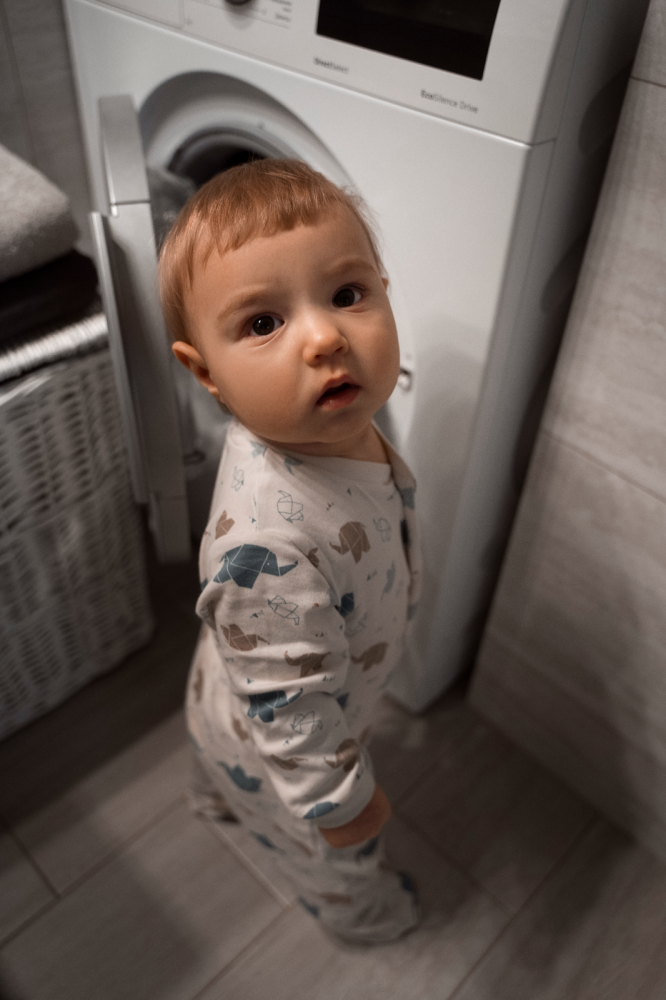
When washing baby clothes, it is important to remember that less is often more. Your baby’s sensitive skin may react to substances that are perfectly ordinary for adults. How can you wash baby clothes safely? Avoid the following:
- Fabric softeners containing fragrances and chemicals
- Strong stain removers and bleaching agents
- Conventional laundry detergents for adults
- Drying outdoors during pollen season
- Using new clothes without washing them first
Fabric softeners containing fragrances and chemicals – although clothes smell lovely and feel soft after using fabric softener, these products often contain fragrances and chemicals that may irritate your baby’s skin.
Strong stain removers and bleaching agents – although effective, they can leave residues in fabrics that are difficult to rinse out. Instead, choose gall soap or gentle, natural alternatives.
Conventional laundry detergents for adults – are not suitable for washing baby clothes, as they often contain optical brighteners, strong fragrances, or dyes. A safer choice is a detergent labelled “for sensitive skin” or “for babies”.
Using new clothes without washing them first – new clothes should always be washed before their first use. Although they may look clean, they can contain chemical residues from manufacturing or the shop.
Drying outdoors during pollen season – fabrics can collect allergens from the air. If possible, dry laundry indoors or in a tumble dryer to minimise the risk of skin irritation.
Many parents wonder how to wash baby clothes as gently as possible – the answer is simple: without fabric softener, at the correct temperature, and with a hypoallergenic detergent such as Camibaby by ISSENCIA, specially designed for little ones.
Frequently Asked Questions About Washing Baby Clothes
Although washing baby clothes may seem simple, parents often have the same recurring questions. That is why we have put together answers to the most common ones:
Do I Need to Wash Newborn Clothes Before Their First Use?
Yes, always. Even new clothes may contain chemical residues from manufacturing. Washing removes potentially irritating substances and prepares the clothes for your baby’s sensitive skin.
How Often Should I Wash Baby Clothes?
Ideally, after every wear, especially base layers or clothing that comes into direct contact with the skin. Baby clothes become soiled quickly, and frequent washing is a normal part of caring for your little one.
Do I Need to Iron All Baby Clothes?
During the first few months, yes. Ironing destroys remaining bacteria and also softens the laundry. Later, as your child’s immune system develops, ironing is no longer essential, although many parents still prefer to do it.
Can I Use a Tumble Dryer?
If you have a model with gentle programmes, a tumble dryer can be a great help. Laundry dries quickly, and you avoid pollen or dust that could settle on fabrics when drying outdoors. However, we recommend drying at a low temperature to prevent damage to delicate materials.
How Can I Deal with Stains?
The most important thing is to act quickly. Soak or pre-wash the clothes immediately, and for larger stains, use gentle products such as gall soap or stain removers specifically designed for baby clothes. It is best to avoid harsh bleaches.
Washing with Love for Little Ones
Washing baby clothes is not just about hygiene; it is also an expression of love and care. Every choice of detergent, every programme or temperature setting, is a decision that helps protect the delicate skin of our little ones.
Do not be afraid to simplify the process. There are products created specifically for babies’ needs. Pay attention to ingredients, avoid unnecessary chemicals, and trust what is clean, gentle, and effective.
And remember, even small steps in your daily routine can have a big impact on the well-being of the whole family. That is why laundry deserves your attention too. Discover our collection of products for sensitive skin and choose a solution that will provide your baby with maximum comfort and safety. Your baby will reward you in the most beautiful way – with a happy smile and healthy skin.


