How to wash towels so they stay soft and smell fresh even after a week?
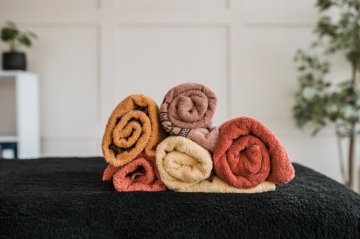
You take a towel out of the cupboard, but instead of something soft and fresh-smelling, you find yourself holding something that feels more like a brush. Stiff, rough and perhaps even a little musty. Towels are one of those everyday items that deserve a little extra care. Simply because if you wash them properly, they will last much longer.
Why do towels become stiff and lose their fresh scent?
Before we look at how to wash towels properly, it is worth understanding why they lose their softness. The most common causes include:
- residue from fabric softener and laundry detergent,
- insufficient rinsing,
- poor-quality materials,
- hard water.
How to wash towels properly?
If you want your towels to stay soft and smell fresh, try following these 6 simple steps.
Use the right amount of laundry detergent
Using too much laundry detergent is one of the most common mistakes. Many people assume that more detergent means cleaner laundry, but the opposite is often true. Too much detergent cannot be rinsed out completely and remains trapped in the fibres. This is why towels can become stiff over time and lose their absorbency.
What can you do?
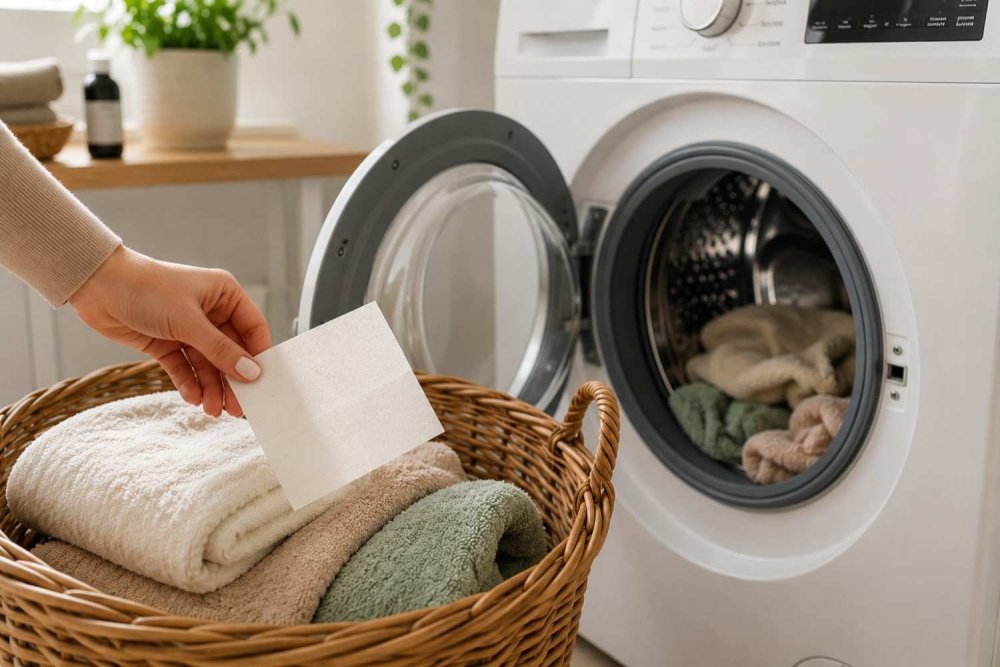
Use less detergent than the manufacturer recommends, or switch to laundry sheets. They are easy to dose: one sheet = one wash. If you have a larger load, simply add another ½ sheet. There is no need for measuring cups, and no detergent residue is left behind on the fibres.
Skip the fabric softener
Yes, you read that correctly. Fabric softener is not the best choice for towels. It creates a coating on the fibres that reduces their absorbency.
It can also contribute to bacteria becoming trapped in the fibres. This is why towels may develop an unpleasant smell even after washing.
TIP: If you want beautifully scented towels, add a few drops of laundry perfume. The fragrance is released gradually, while the towel stays soft.
Wash at a higher temperature
Towels can usually be washed at 60 °C, provided the care label allows it. A higher temperature can help remove bacteria, dirt and cosmetic residue that may build up in the fibres more effectively.
Be careful: Water that is too hot (90 °C) can damage the fibres and cause them to wear out more quickly. This also depends on the material the towels are made from. Always follow the manufacturer's care instructions on the label.
An extra rinse is your friend
One of the best things you can do for your towels is to add an extra rinse cycle. Most washing machines offer this option. A standard rinse is not always enough to remove all detergent residue. And it is precisely this residue that can make towels stiff and rough over time.
Do not overload the drum
This is a common mistake. You fill the washing machine as much as possible to save time and water. However, towels need enough space to move around so they can be washed and rinsed thoroughly.
The drum should be no more than two-thirds full. This gives the towels enough room to move around and allows the water to rinse them thoroughly.
Drying makes a difference
If you have a tumble dryer, use it. The air circulates evenly inside, helping the fibres stay soft and fluffy. You can also add tennis balls to the dryer – they help separate and fluff up the fibres, making your towels even softer.
Towels dried outdoors in the fresh air or indoors are naturally fresh, but they may feel a little stiffer. Once dry, give them a gentle shake before putting them away in the cupboard.
Do not dry them on a radiator. Direct heat dries out the fibres and makes them rough.
How often should you wash towels?
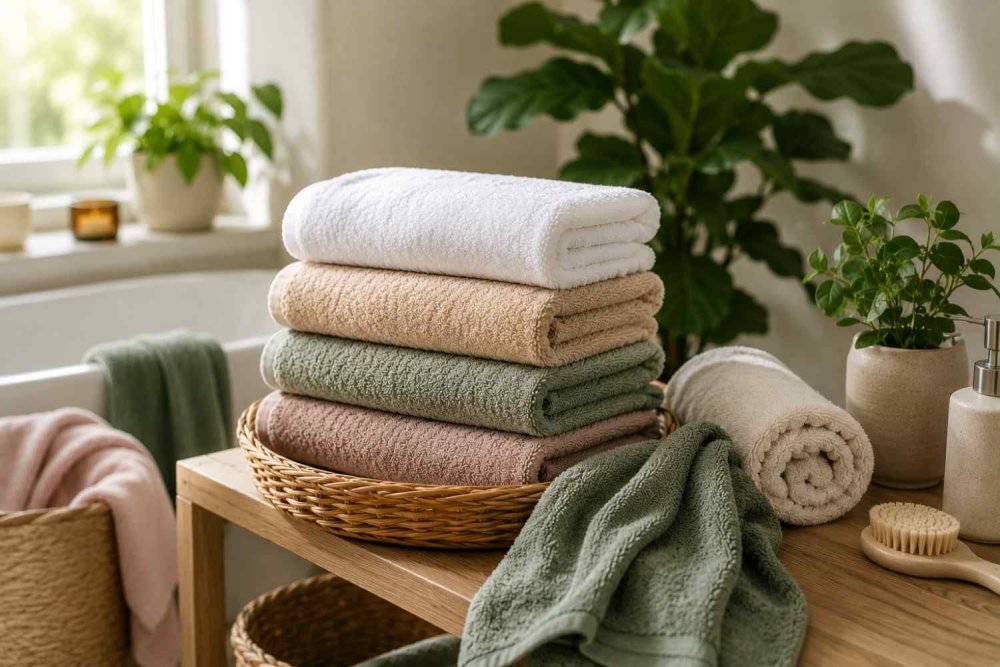
Do you have enough hand towels? For hygiene reasons, we recommend changing them every day. You can then wash them together, for example once a week.
Wash bath towels after 3–4 uses. Put gym towels in the laundry basket after every use (sweat + bacteria = the perfect environment for unpleasant odours). If your towels start to smell before you were planning to wash them, wash them sooner. Don't wait.
A little tip: Use a separate towel for each purpose
- for your hands,
- for your face,
- for your body,
- for the gym.
Hygiene comes first, especially if you have allergies or sensitive skin.
When is it time for new towels?
Even with the best care, towels do not last forever. If you notice that they:
- are starting to lose their colour and fade,
- have fraying edges or small holes are beginning to appear,
- remain stiff and less absorbent despite being washed properly,
...it may be time to replace them. With proper care, a good-quality towel should last 1–2 years.
Taking care of towels doesn't have to be complicated
Simply:
- skip the fabric softener,
- add an extra rinse cycle,
- make sure you dry them properly,
- use less laundry detergent (or switch to laundry sheets).
The result will be soft, fresh-smelling towels that stay in great condition for longer.


